Naples is not a beach city, and anyone arriving expecting sand below the Lungomare will be disappointed. But you can swim, and swim well, if you know where to go: the Posillipo coast with its historic lidos, the protected marine area of the Gaiola (free, with a reservation), the beach at Bagnoli to the west and, a little further on, Miseno. For a day of real sand, take the hydrofoil: Procida in 35–40 minutes, Ischia in an hour.
This page answers the question “where can you swim in Naples” with costs, public transport and the real limitations of each spot, water quality included. Partner prices verified regularly.
Where to swim in Naples: the map in brief
| Place | Type | Cost | How to get there | Worth knowing |
|---|---|---|---|---|
| Gaiola (Posillipo) | Protected marine area, rocks and coves | Free, reservation compulsory May–Sept | Bus 140 to Discesa Gaiola, then 10 min downhill on foot | Limited capacity, closed during weather alerts |
| Bagno Elena and the via Posillipo lidos | Paid lidos, small beaches | Entry + sunbed, price list only on the official website (bagnoelena.it) | Bus 140 from Mergellina/Santa Lucia | Dark sand, little space, book at weekends |
| Marechiaro | Rocks and lidos on platforms | Free on the rocks, lidos charge | Bus 140 + walk down | Fishing village, parking impossible |
| Bagnoli–Coroglio | Public beach and lidos | Public beach free | Cumana (EAV) to Bagnoli, 10 min on foot | Check the stretch on the ARPAC map |
| Miseno (Bacoli) | Sandy beach | Public and lidos | Cumana to Fusaro + EAV bus (see below) | The most “parasol-friendly” beach of the Campi Flegrei |
| Procida, Ischia, Sorrento | Real beaches | Hydrofoil or train + lido if you want one | Molo Beverello / Porta di Massa / Circumvesuviana | Day trip, see below |
Posillipo: the historic lidos and the rocks
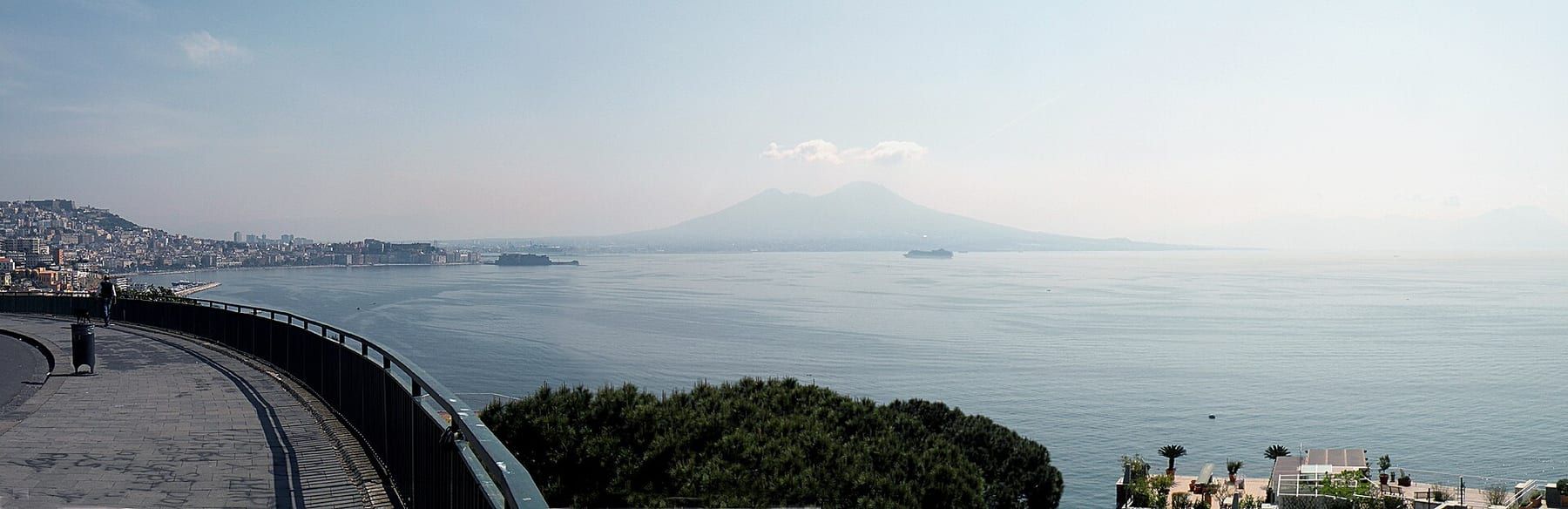
Via Posillipo runs high above the coast; the sea is below, reached by steep descents or by the lidos’ lifts. The best known is the Bagno Elena, open since the 19th century at the foot of Villa Donn’Anna: dark sand, deep water straight away, a view of Vesuvius. Nearby you’ll find other establishments of the same kind, all paid and all short on space: on weekends in July and August, book a sunbed the day before or arrive by 9.
To get there take ANM bus 140, which leaves from via Santa Lucia (Plebiscito), passes along the Riviera di Chiaia and Mergellina and climbs the whole of via Posillipo to the terminus at Capo Posillipo, with a bus every 19–20 minutes from 5:30 am to about 11 pm (route and times verified on anm.it). The ANM urban ticket costs €1.30 per ride or €4.50 for the day pass (fares verified on anm.it). The Mergellina funicular goes up the hill, not down to the sea: you don’t need it.
Free rocks along the coast do exist (below the Gaiola, at Marechiaro, at Riva Fiorita), but they’re slabs of tufa and concrete with no facilities. Bring water shoes: there’s no shortage of sea urchins.
Gaiola: how free entry works
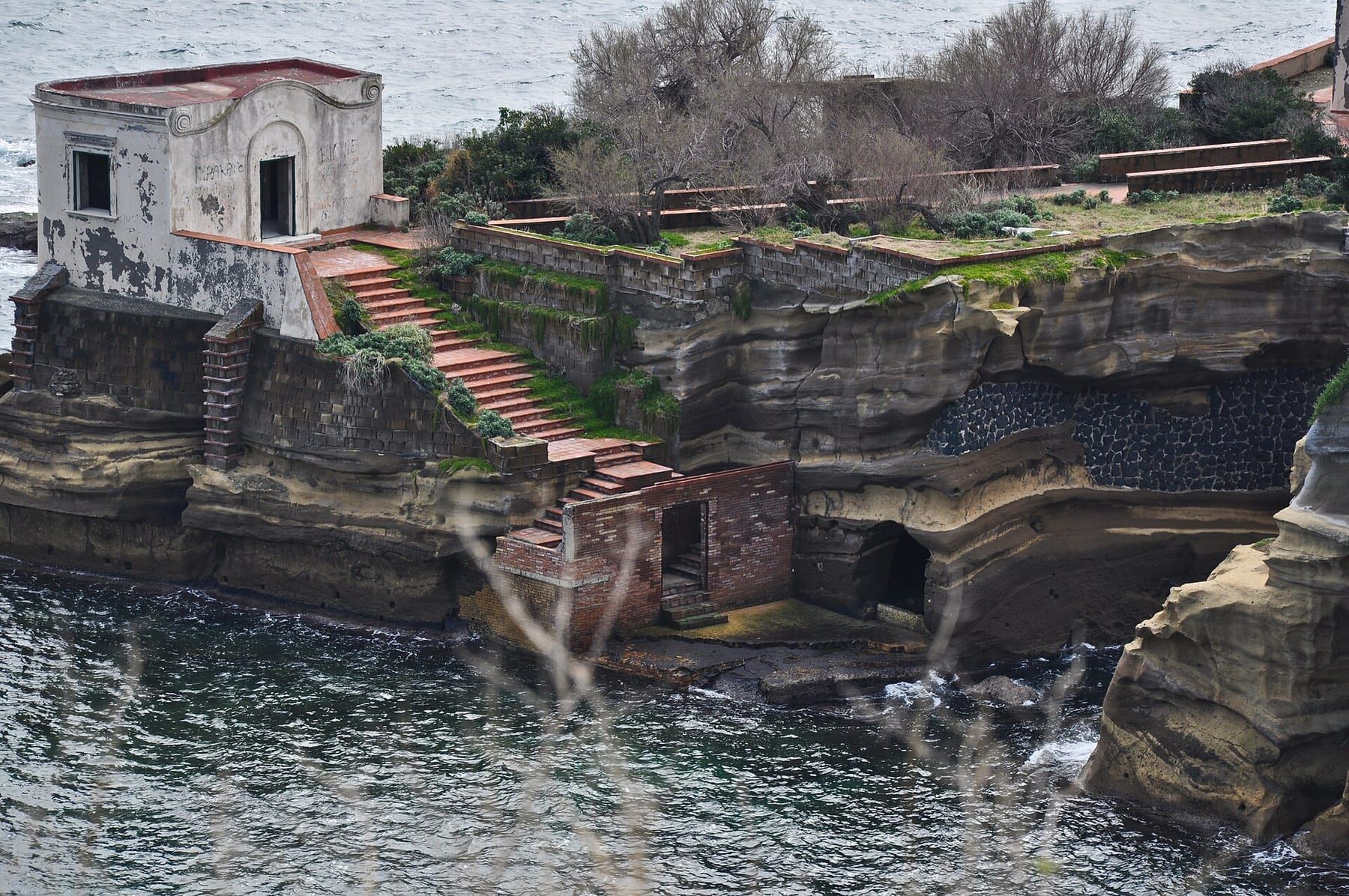
The Gaiola Underwater Park Protected Marine Area is where Neapolitans go when they want clear water without leaving the city: 41.6 hectares of sea between Marechiaro and the Bay of Trentaremi, with the two islets a few metres from the shore and the remains of the Roman villa of Pausilypon underwater. You swim from a small pebble cove and from rock platforms. No sand, no bar: bring water and food.
The access rules, verified on the park’s website (areamarinaprotettagaiola.it):
- Summer (May–September): free entry every day, only with an online reservation on the park’s website. Two sessions: morning 9:00 am–1:00 pm and afternoon 2:00–6:00 pm. Free electric shuttle and parasols.
- Winter (October–April): free entry with registration at the entrance or online reservation, up to 200 people. Hours 10:00 am–5:00 pm (October, November, March, April) and 10:00 am–3:00 pm (December–February).
- During a Civil Protection weather alert the park stays closed: check the evening before.
- The Visitor Centre on Discesa Gaiola opens Tuesday to Sunday 10:00 am–4:00 pm in summer.
Summer session places go quickly at weekends: book as soon as the calendar opens, usually a few days in advance. If everything is full, the alternative is to see the Gaiola from the water on a snorkelling tour led by a marine biologist: the Napoli:Snorkeling with a marine biologist & authorized guide lasts 3 hours, costs €72 and includes the equipment. It’s also the simplest way to see the Roman moray-eel pool and the submerged fish tanks, which you can’t make out from the shore.
Marechiaro and the Bay of Trentaremi
Marechiaro is the fishing village below Posillipo, the one with the “fenestella” of the song. From the little square at the bottom of the descent you climb down onto the scoglione, the rock slab where you can lie for free, or go into one of the stilt lidos with sunbeds and a restaurant. The water is deep straight away and generally clean; with a south-westerly libeccio wind the sea fills with weed and debris and it’s better to give it a miss.
The Bay of Trentaremi, just west of the Gaiola, has no access from land: you reach it by kayak or boat, and it’s one of the stops on the boat tours that leave from Mergellina. Above the bay is the Pausilypon Archaeological Park with its Roman theatre, which can be visited together with the Grotta di Seiano only on a guided tour.
Bagnoli and Coroglio: the public beach and its limits
Bagnoli is the district of the former Italsider steelworks, west of the city. Its beach is long, sandy and largely public: from the Bagnoli stop on the Cumana (EAV) it’s a ten-minute walk. In summer lidos and evening bars open here on the Coroglio stretch, below the islet of Nisida (for the evening, see the guide to Naples at night).
The limitation is the water. The Bagnoli shoreline sits right next to the industrial area under remediation, and some stretches remain closed to swimming: before spreading out your towel, check the exact spot on the ARPAC map (below) and look for the signs on the shore. At Bagnoli too, as along the whole coast, the water gets worse for a day or two after heavy rain.
For a day of “parasol” sand without leaving the Campi Flegrei, the best choice is Miseno, in Bacoli: a sheltered beach, shallow water, good for children. Get there on the Cumana to Fusaro and then the EAV Bacoli urban bus (lines 144-145-146, roughly one an hour to the Miseno terminus, times on eavsrl.it); in summer there’s also the direct EAV line 150 from Vomero. Or by car on weekdays.
Water quality: how to check before you go in
In Campania, bathing-water monitoring is done by ARPAC, with regular samples from April to September. On the portal (portale.arpacampania.it/balneazione) you’ll find the interactive map with every point classified and the date of the last sample; there’s also the “Balneazione” app. Use it like this:
- Look up the precise stretch, not the neighbourhood: at Posillipo and Bagnoli, points a few hundred metres apart can have different results.
- Check the sampling date. If it’s from three weeks ago and it rained yesterday, treat the figure with caution.
- Avoid swimming in the 24–48 hours after a summer storm: outflows into the sea are the historic problem of the Neapolitan coast, so much so that the Gaiola park keeps an open public petition on the subject.
Where the water is almost always good: Gaiola, Marechiaro, Trentaremi, the via Posillipo lidos towards Capo Posillipo, Miseno. Where it’s forbidden or not advised: the port stretch, San Giovanni a Teduccio and the flagged points at Bagnoli.
Public or paid: what to expect
In the city of Naples the only real public beach is Bagnoli; the rest are free rocks or paid lidos. A lido at Posillipo in high season costs as much as a lido in Sorrento, with a third of the space: ask for the day’s price list before going down, because entry and sunbed are charged separately. The Gaiola is the true exception: free, parasols included, but with capped numbers and zero facilities.
If you want a comfortable sea for a whole day, the sums work out better with an island: the ferry costs more than the bus, but you get sand, showers and shade at village prices.
The real beaches: Procida, Ischia and Sorrento in a day
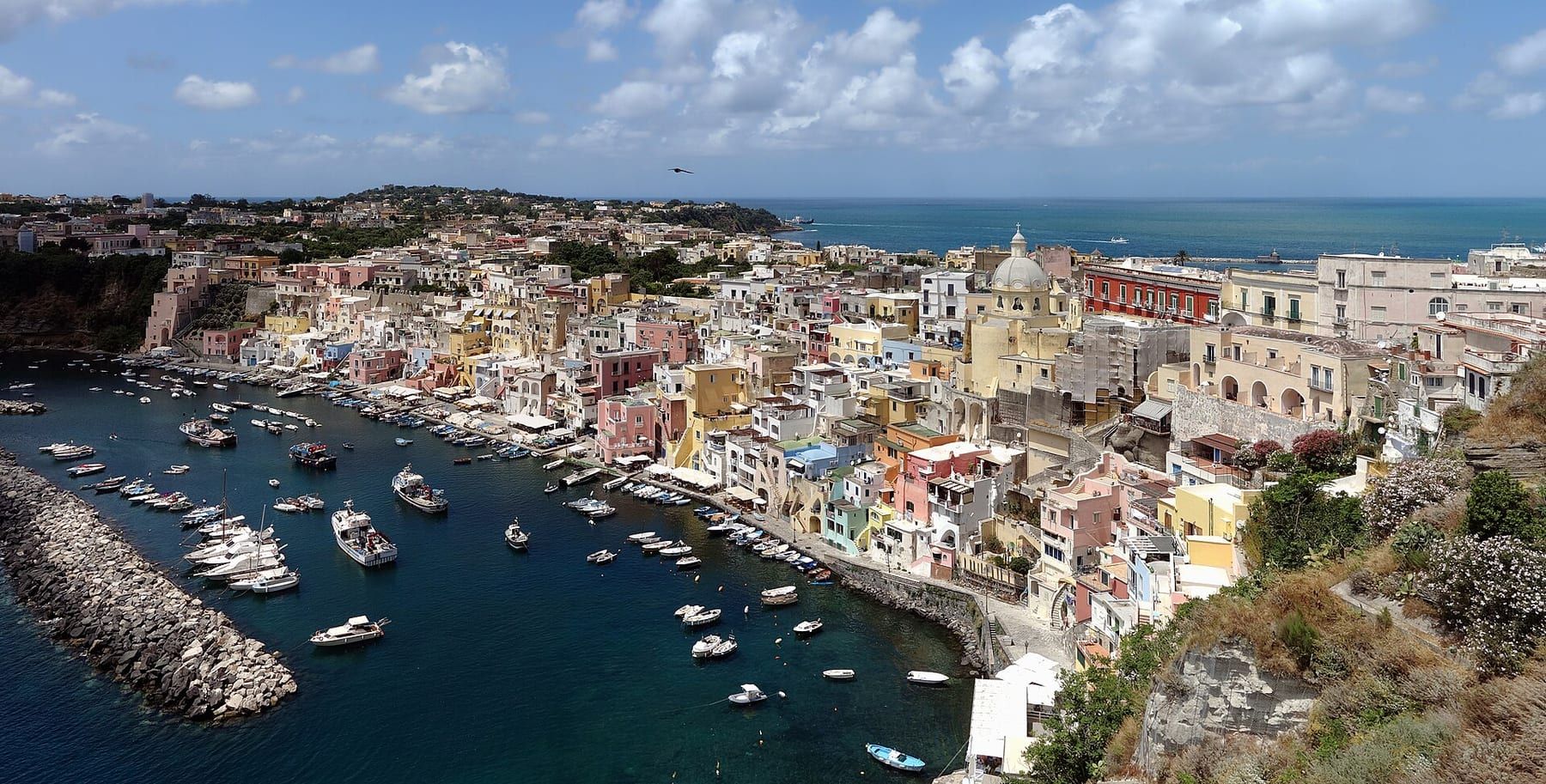
Procida is the nearest island: 35–40 minutes by hydrofoil from Molo Beverello, a little longer on the Caremar ferry from Porta di Massa. From the port an island bus takes a quarter of an hour to reach the Chiaiolella and the Pozzo Vecchio beach; the Chiaia beach is reached on foot by a stairway below Terra Murata. The whole island fits into a day, with a lunch break at the Corricella.
Ischia is bigger and needs to be chosen by area: the Maronti (the longest beach, south), Citara with the Poseidon Gardens and the spas, Cartaromana with a view of the Aragonese Castle. Hydrofoil 50–60 minutes from Beverello, ferry from Porta di Massa. If you don’t want to change buses three times, the From Naples: Full-Day Ischia Boat Tour with Lunch & Swimming (€149, 10 hours) circles the island with stops for swimming; the Procida & Ischia: Full-Day Experience with Cruises from Naples (€93, 12 hours) combines the two islands.
Sorrento is not a sand destination: the beaches at Marina Grande and Marina Piccola are small and mostly taken up by lidos. It’s worth it for the Bagni della Regina Giovanna, a natural pool among the remains of a Roman villa 3 km from the centre, reached on foot or by bus. Get there on the Campania Express or the Circumvesuviana (50–70 minutes from Porta Nolana/Garibaldi); fares and times on the pages about the Amalfi Coast and Sorrento and transport in Naples.
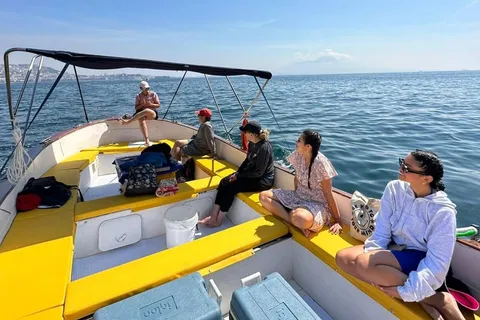
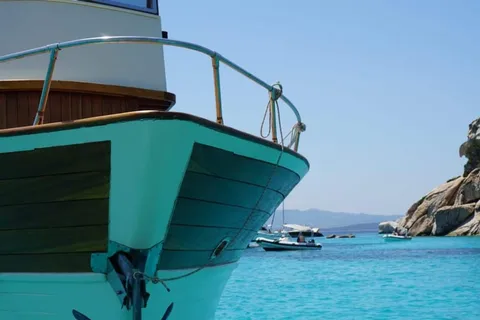
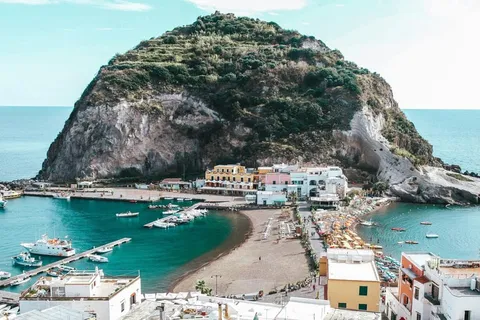
Doing it yourself with the ferry and the island bus costs less than the tour, but it takes connections and a little patience in August, when the return hydrofoils fill up: buy your return ticket on the way out. Details of fares and companies (Caremar, SNAV, Alilauro) are on the Ischia and Procida page.
When to swim
The lido season in Naples runs from late May to the end of September. The water is pleasant from mid-June; July and August are the hottest and busiest months, September is often the best: the sea still warm, lidos half empty, the Gaiola bookable with less notice. May and October work for the Posillipo rocks on sunny days; for the rest of the year the Gaiola stays open for anyone who just wants to walk and look. The month-by-month climate table is in the guide to when to visit.
What to bring and rules to respect
- Water shoes everywhere except Bagnoli and Miseno: tufa, sea urchins and concrete.
- At the Gaiola the rules of the protected marine area apply: no fishing, no anchoring, no non-biodegradable sunscreen in the most protected zones; the staff check.
- Bring water and food to the Gaiola and Marechiaro: there are no kiosks on the rocks.
- Don’t leave bags unattended on the rocks or on the public beach at Bagnoli.
- On bus 140 and the Cumana in August, board with your ticket already validated or with the app: inspections are frequent.
If you have a single beach day, the choice is simple: morning at the Gaiola with a reservation (or on the guided snorkelling if the free places have gone), afternoon on the Lungomare. With two days, give the second to Procida.
Check availability for snorkelling at the Gaiola from €72 · ★ 4.9 · GetYourGuide
Questions people ask
01Can you swim in the city of Naples?
Yes: at the Gaiola (protected marine area, free with a reservation), on the rocks at Marechiaro, at the paid lidos of Posillipo and on the beach at Bagnoli. Always check the ARPAC bathing-water map before choosing your spot.
02Is the Gaiola free? How do you book?
Entry is free. From May to September you need an online reservation on the park's website (areamarinaprotettagaiola.it), with two sessions: 9:00 am–1:00 pm and 2:00–6:00 pm. From October to April you just register at the entrance, up to 200 people.
03Which beach is closest to the centre of Naples?
The lidos on via Posillipo (Bagno Elena and neighbours) are 15–20 minutes by bus from the Lungomare. The largest public beach within the city limits is at Bagnoli, Bagnoli stop on the Cumana.
04Is the water in Naples clean?
It depends on the stretch and the day. The Posillipo coast and the Gaiola are generally fit for swimming; some stretches of Bagnoli and the port are not. The official classification is on the ARPAC interactive map, updated with every sample. Avoid swimming in the 24–48 hours after a storm.
05Which island should you choose for a beach day from Naples?
Procida if you want to arrive in 40 minutes and switch beaches on foot; Ischia if you're after long beaches (Maronti, Citara) and thermal spas; Capri if you care more about scenery than sand.
06When can you swim in Naples?
From mid-June to the end of September the water is warm; May and October are fine if you don't mind 18–20 degrees. The lido season generally runs from late May to September.
07Do you need to book for snorkelling at the Gaiola?
Yes. Tours with a marine biologist go out in small groups and in summer the weekend dates sell out a few days ahead. Free access to the area, on the other hand, is booked free of charge on the park's website.
Sources & official pages
Read next
- Ischia and ProcidaHydrofoils from Beverello, ferries from Porta di Massa with verified fares, Corricella, the Aragonese Castle and spas: both islands in a day from Naples.
- Boat toursBoat trips in the Gulf of Naples: Capri by sea from €84, snorkelling at Gaiola, Ischia and Procida. Prices, ferry comparison and what happens in rough seas.
- Amalfi Coast and SorrentoSorrento, Positano and Amalfi in a day from Naples: minivan from €53 or Circumvesuviana, SITA buses and summer ferries with verified fares. Choose well.
- When to visitNaples weather month by month, swimming months, Vesuvius and Capri seasons, San Gennaro, Christmas, Ferragosto, crowds and prices. Choose the right dates.
- TransportAlibus for €5, metro and funiculars, Circumvesuviana to Pompeii for €3.30, ferries to Capri and Ischia with verified fares. Plan how to get around Naples.
- CapriHydrofoil from Beverello or ferry from Porta di Massa, the cost of the Blue Grotto, funicular and Monte Solaro. Compare DIY and tours from Naples.